


Most moving checklists you'll find online are the same list, dressed up differently — pack early, label your boxes, hire movers you trust. None of that is wrong. It's also not where moves in Singapore actually run into trouble. The real problems tend to be smaller, stranger, and more specific than anything a generic checklist would think to mention.
The Pre-Move Survey Most People Don't Know Exists
A proper move usually starts with a survey, not a truck showing up on the day — but it doesn't need to be a physical visit for every job. For smaller moves, a quick virtual survey (a few photos, a video call walking through the unit) is often all that's needed, and insisting on a physical visit for something small just slows everyone down for no real benefit. Physical surveys earn their place on larger, more complex moves — bigger units, unusual furniture, buildings with known access quirks. If a narrow street or an undersized lift causes a problem on moving day despite a survey having been done, that's a surveying failure, not something the customer should have had to anticipate themselves.
The Oversized Items People Don't Expect
Everyone assumes a piano or a wardrobe is the hard case. In practice, the items that actually cause problems are more specific than that: sliding wardrobes and storage bed frames, which almost always need to be dismantled before they'll move at all, and long sofas in older buildings with smaller lifts — a combination experienced surveyors spot immediately, but one that catches first-time movers completely off guard.

Old HDB Doorways Are Often the Real Bottleneck — Not the Lift
Most people fixate on whether something fits in the lift. In older HDB flats, the doorway itself is sometimes the tighter constraint. A fridge that clears the lift without any issue can still be too wide for the actual unit door. It's a detail nobody thinks to check until it's the reason a move stalls.

Full Cabinets and Bookshelves Aren't a Shortcut — They're a Hazard
A common assumption: leave the cabinet or bookshelf loaded and just move it as-is, stuff and all. It feels efficient. It's actually a handling hazard — the added weight puts real strain on both the movers carrying it and the furniture's own joints and frame, and that's before accounting for what happens if something inside shifts mid-carry. Emptying it first isn't excessive caution, it's the difference between a normal lift and an injury or a broken piece of furniture.
New Condos Are Often Harder Than Old Ones
This one surprises almost everyone: newer developments tend to cause more move-in problems than established condos, not fewer, for two compounding reasons. First, a large number of owners are all trying to move in around the same completion window, so the lift is genuinely more contested than in an older building where move-ins are spread out over years. Second — and this catches people off guard even more — many new developments are built to maximise land use, which often means the truck simply can't get anywhere near the actual building. Items end up needing a long push or a shuttle run by trolley from wherever the truck can park to the loading lift itself, adding real time and distance that older, more spread-out estates rarely require. "New and modern" doesn't translate to "easier to move into."
Condo Moving Hours Are Fairly Standard — Know the Exceptions
Most condos run on a consistent pattern: weekdays 9am–5pm, Saturdays 9am–1pm. Some older condos are more relaxed and allow a full day on Saturdays — worth checking specifically if your building is one of the older ones, since it's the kind of detail that can free up scheduling if you know to ask.
On approvals generally: most management offices are genuinely accommodating, and it varies building to building — some are stricter than others. But if a move isn't properly booked in advance, it's usually the moving company that takes the blame for the oversight, not the resident. That's exactly why the booking and approval step should never be treated as an afterthought.
Who Should Actually Handle the Paperwork
Approvals can get tight, especially on last-minute moves — and while most MCSTs will work with you, this shouldn't be left for the mover to sort out on the day. The resident is always the better point of contact with building management, since it's their account, their relationship, and their name on the unit.
This matters even more now that a growing number of condos manage move-in/move-out approvals through apps like iCondo — submitting the request, paying any deposit, and getting notified once management approves, all from the resident's own login. It's not universal yet; adoption varies MCST to MCST, and plenty of buildings still run this the traditional way. But where it exists, it's tied specifically to the resident's account, not something a mover can submit on someone else's behalf — one more reason the approval step genuinely belongs with the person moving, not the company hired to move them. Worth checking early whether your building uses one of these apps, since it's an easy thing to miss if nobody mentions it.
A mover can advise on what's usually required, but chasing down approvals with a management office you have no standing relationship with is a losing position to be arguing from.
Moving During Hungry Ghost Month, If You Don't Mind Ghosts
Here's a genuinely Singapore-specific one: many Singaporeans traditionally avoid moving house during the seventh lunar month — Hungry Ghost Month, usually falling around August, sometimes stretching into September — believing it invites bad luck. It's a widely observed custom, and demand for movers drops accordingly. If it's not a tradition that matters to you, that dip in demand is a real, practical opportunity: moving companies, ours included, tend to have more availability and softer pricing during this period simply because fewer people are booking. Worth knowing whether you're trying to avoid the month entirely, or trying to take advantage of it.
Book Early for Month-End
Month-end is consistently the hardest time to secure a moving slot — it's when most tenancies turn over, so demand spikes predictably every single month. If your move is flexible at all, avoiding the last few days of the month makes booking noticeably easier.
Check Whether Your Movers Offer Insurance Without You Having to Ask
This is a quieter signal than it sounds, but it's one of the clearest ways to tell a professional operation from one cutting corners: does the moving company offer insurance as standard, or only if a customer specifically asks? A company confident in its own handling doesn't wait to be asked — it puts coverage on the table upfront, because it expects to be held to that standard regardless of whether the customer knew to request it. One that only offers it reactively is often signalling that insurance was never really built into how they operate, just something bolted on when pushed. It's a small question that tells you a lot about how a company thinks about its own accountability before anything's even gone wrong. On our side, every plan includes basic coverage by default — not something you have to know to ask for.
Empty and Air Out Your Fridge Before It Goes Into Storage
An easy one to forget, and an unpleasant one to discover: a fridge that goes straight from "still running" into a sealed box or storage unit without being properly cleared out and dried first will smell — badly — by the time it comes back out. The fix is simple but needs a few days' lead time: clear out your food stock, unplug the fridge, and leave the door open to air-dry fully before moving day. Practically, that usually means living off takeout for the last few days before the move rather than trying to use up every last item in the freezer. Small inconvenience now, versus a genuinely bad smell to deal with later.
Be Honest With Your Movers About What You Already Know
This one's blunt, but worth saying plainly: if something previously didn't fit through a lift or a doorway, tell your movers before moving day, not after the truck arrives. Some people leave this detail out, hoping the crew will just find a way to make it work rather than pay for proper handling. It rarely ends well, and it turns an avoidable problem into a dispute on the day itself — the exact opposite of what anyone actually wants from a move.
When Moving Day and Move-In Day Don't Line Up
Even with a proper survey, the right booking, and good timing, the two dates sometimes just don't overlap — your old place empties out before the new one's ready. This is one of the most common situations we see, and it's usually not because anyone planned badly. Key handover dates, renovation timelines, and lift booking windows at two separate buildings rarely cooperate with each other by coincidence.
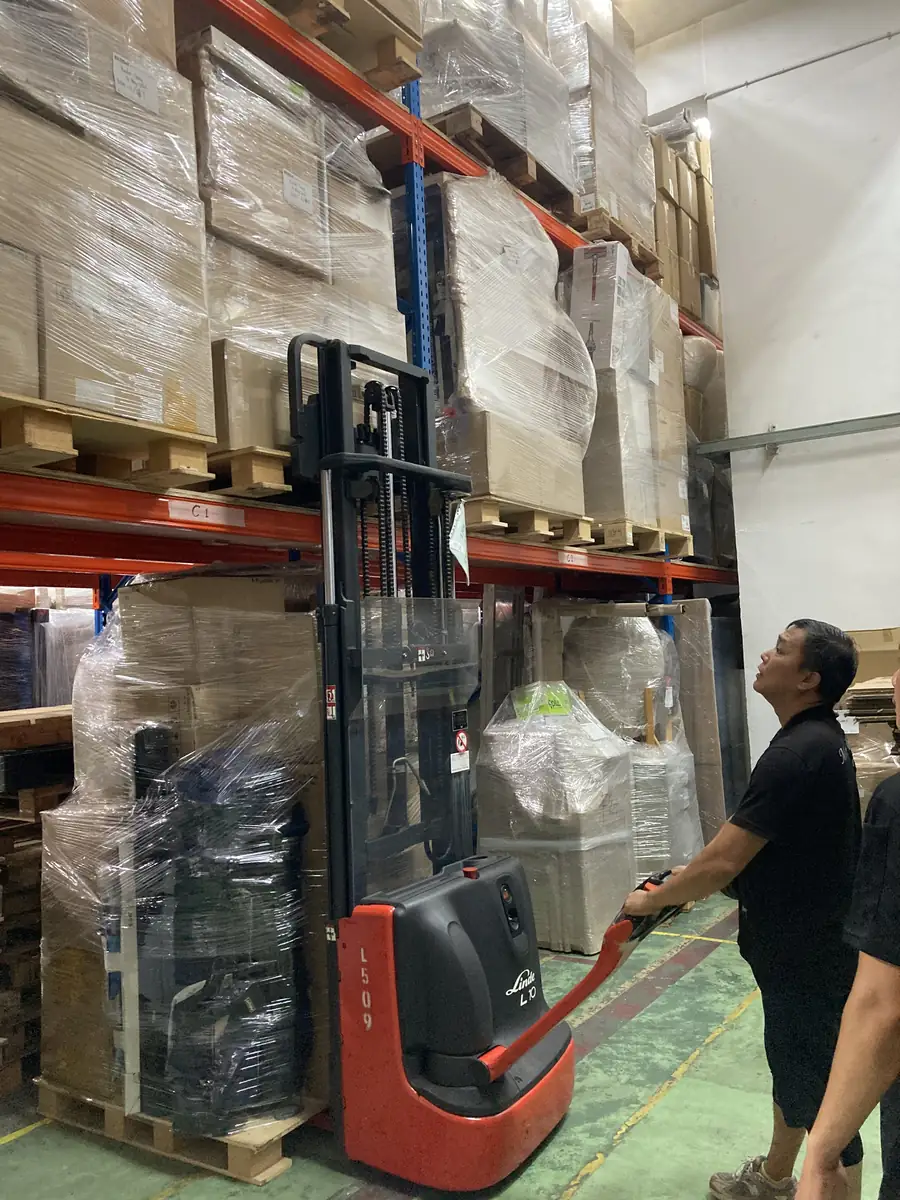
This is exactly what storage-in-transit is built for: rather than forcing a same-day handoff that may not be physically possible, your things go into secure, photographed storage for however long the gap actually is — a few days or a few months — and come back out when your new place is genuinely ready, not just theoretically ready.
It's also where VaultFlow's own crew brings the same instincts covered in this whole article, since it's the same team behind both. The surveyor who flags a narrow doorway is the same operation photographing your things before they go into storage, checking that a fridge has been properly cleared and dried before it's sealed away, and handling the handoff between your old address and your new one — not a different company picking things up partway through with none of that context.
If your move is coming up, the full plan breakdown — including how storage fits in when timing doesn't cooperate — is on the Pricing page.