


Most people start this decision with the wrong question. They ask "which is cheaper" — self storage or valet storage — when the two aren't actually solving the same problem. One is a rental agreement for empty space. The other is a service that handles your things for you. The real question isn't which one costs less. It's which trade-off you're actually willing to live with.
Here's an honest breakdown of both models — where each one genuinely works, and where each one quietly costs you more than the sticker price suggests — plus where a hybrid approach, the one VaultFlow was actually built around, fits in between.
What Is Self Storage, Actually?
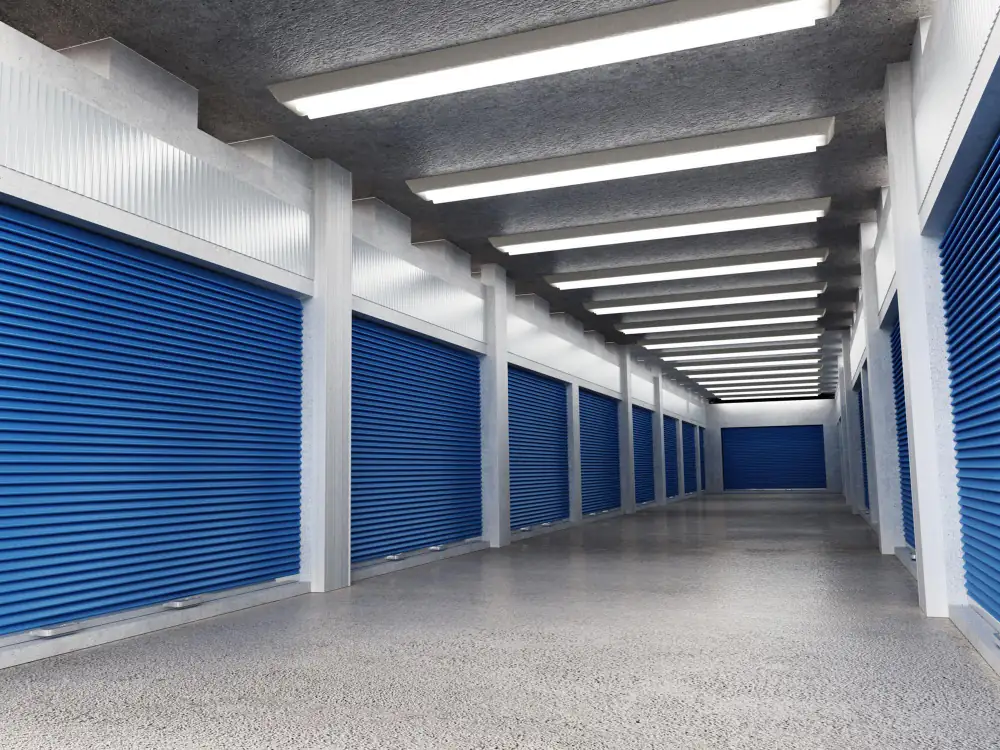
Self storage is the model most people picture first: you rent a unit, you drive your own things over, you carry them in yourself, and you get a key or an access code. It's the row-of-individual-units facility model, usually accessible whenever the building's open — sometimes 24/7.
What it gets you:
- Direct, unlimited access to your unit, on your own schedule
- Often the lowest sticker price for a given size, especially with a new-customer discount
- No dependency on anyone else's timeline to get something back
What it actually costs you:
- Your own labor. You're the one carrying boxes, driving a truck or making multiple trips, and doing it all again when you move out
- Rate creep. Self storage pricing is notorious for aggressive intro discounts that quietly climb once you're a few months in and unlikely to go through the hassle of clearing everything out over a rate hike
- No real inventory. Once your unit door closes, the facility itself has no idea what's actually inside it — which becomes a real problem if something specific goes missing or gets damaged and you need to prove what was in there in the first place
What Is Valet Storage, Actually?
Valet storage flips the labor side of the equation. A crew comes to you, packs and picks up your things, and drives them to a facility you never see. When you want something back, you request it and it's delivered.
What it gets you:
- No lifting, no driving, no truck rental
- Often runs out of a professional warehouse rather than a rented unit
What it actually costs you:
- Visibility. This is the real, structural weakness of most valet storage: once your things leave your hands, you're trusting a black box. Many valet operators don't photograph items at pickup and can't tell you with confidence what condition something was in before it left your home — so if a dispute ever comes up, there's nothing to point to
- Access friction. Getting something back usually means a request, a wait, and a delivery fee — there's no walking in and grabbing it yourself
- Pricing that's genuinely hard to compare. Without a physical unit size to point to, valet pricing is often quoted per item or per "estimated volume" — which makes it difficult to know if two quotes are actually comparable, or if you're being quoted fairly at all

What's the Actual Difference Between the Two?
In one sentence: self storage trades your labor for lower cost and full access; valet storage takes your labor away, but usually asks you to give up visibility and access in return.
Where Self Storage Genuinely Makes Sense
To be fair to it: if you need frequent, unscheduled access — you're running a small business out of your unit, or you're in and out multiple times a week — self storage's on-demand access is genuinely hard to beat. No model built around a request-and-wait cycle will serve that use case as well.
Where Valet Storage Genuinely Makes Sense
If you have very little time, no vehicle, and you're storing things you're confident you won't need back for a long while, the full-service pickup of valet storage solves a real problem. The trade-off is worth it specifically when visibility into your stored items was never something you needed in the first place.
How Much Does Each Actually Cost in Singapore?
Real numbers are more useful than vague comparisons, so here's what's actually, currently published:
VaultFlow's Vault plans run from $45/month (Vault Mini, 10 sqft) up to $212/month (Vault XL, 61 sqft), with Pallet plans at a flat $62/pallet/month for boxed, stackable goods. Every one of those rates is locked for your full commitment term the moment you sign — no prepayment required to get that lock.
Self storage vs valet storage: the real price comparison
The honest answer to "which is cheaper" is that the sticker prices are close enough that the sticker isn't the deciding factor. What separates the two models — and what most comparisons skip — is what happens to your cost after month one. Here's the comparison that actually matters, dimension by dimension.
What the advertised price coversSelf storage: the empty unit, and only the unit. Transport, a truck, your labor, padlock, and any trolley or lift-access quirks are on you. Valet storage: usually includes collection, but the collection, retrieval and delivery fees are often quoted per job — and not always before you commit. VaultFlow: the monthly rate covers the space; every moving fee and surcharge is published on the pricing page before you book, so the all-in figure is knowable in advance.
What happens to your rate over timeThis is where the models genuinely diverge. Self storage is notorious for intro discounts that expire quietly — the rate that got you in the door is rarely the rate you're paying a year later, and by then, moving everything out over a hike feels like more work than paying it. Valet storage varies by operator, and re-quoting is common because your "estimated volume" can be re-estimated. VaultFlow locks your rate for your full commitment term the moment you sign, with no prepayment required — and any increase after your term is capped and disclosed ahead of time.
The costs that don't appear on the price listSelf storage: your own hours, vehicle rental or delivery hires each direction, and the space mismatch — units come in fixed sizes, so you routinely pay for air. Valet storage: retrieval fees each time you need something back, and with many operators, no photographic record of what went in — which is a real cost the day something is missing or damaged and you can't prove its condition. VaultFlow: retrieval and access fees exist too — the difference is they're published, so they're a known cost, not a discovered one.
Getting your things back outMoving out has a price in every model. In self storage it's your labor and a truck again. In valet storage it's a delivery job, priced at that operator's discretion at that time. At VaultFlow it's a published move-out fee — and on a 12-month commitment, one move-out is included.
So the one-line version: self storage tends to be cheapest on day one and most expensive to live with; valet storage is priced for convenience but often hard to pin down; VaultFlow's bet is that a published, locked price beats a low, moving one.
How VaultFlow Fits Between the Two
VaultFlow exists because those two trade-offs — self storage's labor-and-rate-creep problem, valet storage's visibility problem — aren't actually inseparable. You shouldn't have to choose between "I can see and access my things" and "I don't have to do the heavy lifting."
Concretely, that means:
- Every item photographed at pack-in, viewable in your account anytime — the same visibility self storage gives you just by walking in, without needing to walk in
- A flat, published rate per plan, locked for your entire commitment term the moment you sign — not an intro discount that quietly expires
- In-house professional movers, not a subcontracted crew handed off partway through — one team, accountable start to finish
- A choice of Pallet or Vault plans, so you're not paying for a full unit's worth of space just to store a few boxes — a common hidden cost of self storage pricing that assumes you need a whole unit either way
The Honest Trade-Off
In the interest of the same transparency this whole comparison is built on: VaultFlow doesn't offer 24/7 self-access. Every plan includes one free access visit a month, booked a day ahead — which covers the overwhelming majority of what people actually need storage for, but it's genuinely not the same as walking into a self storage facility at 11pm on a whim. If unscheduled, anytime access is non-negotiable for you, that's a real point in self storage's favor, and it's worth saying plainly rather than glossing over.
So, Which One Actually Fits You?
A quick way to decide:
- Choose self storage if: you need frequent, unscheduled access and you're comfortable doing your own lifting and driving
- Choose typical valet storage if: you want the labor handled and you're genuinely not concerned about seeing what's in storage or how quickly you can get it back
- Choose VaultFlow if: you want the labor handled — or the option to do it yourself — but you're not willing to give up seeing what you own, or the certainty of what you're paying month to month
If that last one sounds like what you actually want, the full plan breakdown — every size, every price, published — is on the Pricing page.